|
|
|
|||||||
Part I: Problems
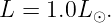
Problem 1: energy radiated by the SunUsing the nominal solar luminosity, calculate how much energy the Sun radiates in:
Problem 2: solar flux at one astronomical unitTreat the Sun as an isotropic emitter. Use
to calculate the solar bolometric flux at one astronomical unit.
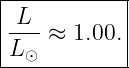
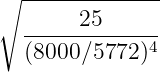
Problem 3: infer luminosity from flux and parallaxA star has measured bolometric flux
and parallax
Assume the simple high-signal-to-noise inversion
Find:
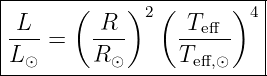
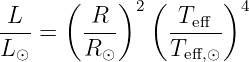
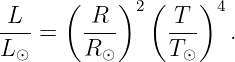
Problem 4: luminosity from radius and effective temperatureA star has
Use
to find L∕L⊙.
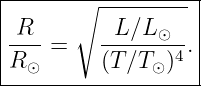
Problem 5: infer stellar radiusA star has
Find its radius in solar radii.
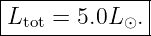
Problem 6: equal-luminosity unresolved binaryTwo identical stars each have luminosity
They are unresolved. Find:
Problem 7: unequal unresolved binaryAn unresolved binary has
Find:
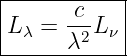
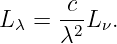
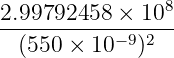
Problem 8: spectral luminosity conversionAt wavelength
a source has spectral luminosity
Find the corresponding:
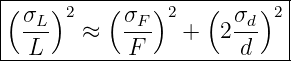
Problem 9: luminosity uncertainty from flux and distanceA source has
Estimate the fractional luminosity uncertainty using first-order independent-error propagation.
Problem 10: luminosity uncertainty from radius and temperatureA star has independently measured
Estimate the fractional uncertainty in luminosity inferred from
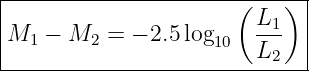
Problem 11: bolometric magnitudeA star has
Using
find its bolometric absolute magnitude.
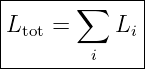
Problem 12: a complete binary star luminosity exampleA detached binary contains:
The system is at
Assume both stars radiate according to the effective-temperature relation. Calculate:
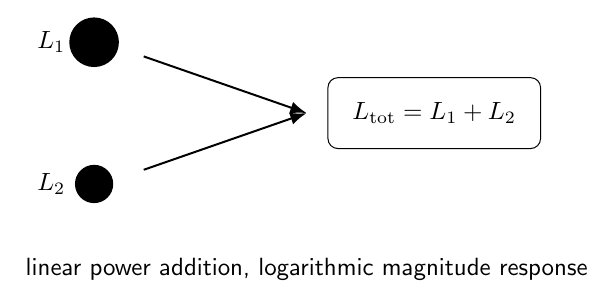
Figure 1. In an unresolved binary, energy outputs add linearly even though astronomical magnitudes combine logarithmically.
Part II: Complete Solutions
Solution 1Luminosity is energy per unit time:
For one second,
For one hour,
A Julian year is
Therefore
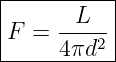
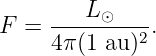
Solution 2Use
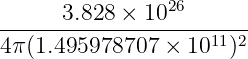
Substituting the nominal values,
This is the expected scale of the total solar irradiance near Earth.
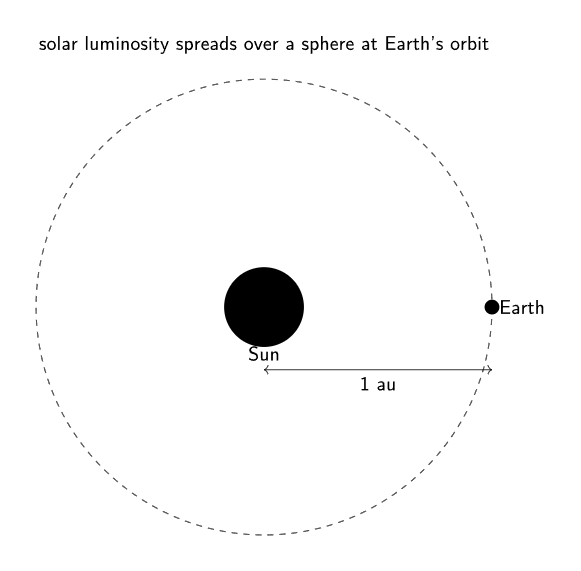
Figure 2. Solar luminosity is an intrinsic power, while the solar flux at Earth follows from geometric spreading over a sphere of radius one astronomical unit.
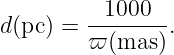
Solution 3The distance is
Convert to meters:
Then
Therefore
The numbers were deliberately chosen to produce a solar-luminosity example.
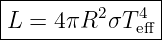
Solution 4Use
Thus the star radiates about 6.4 times the solar luminosity.
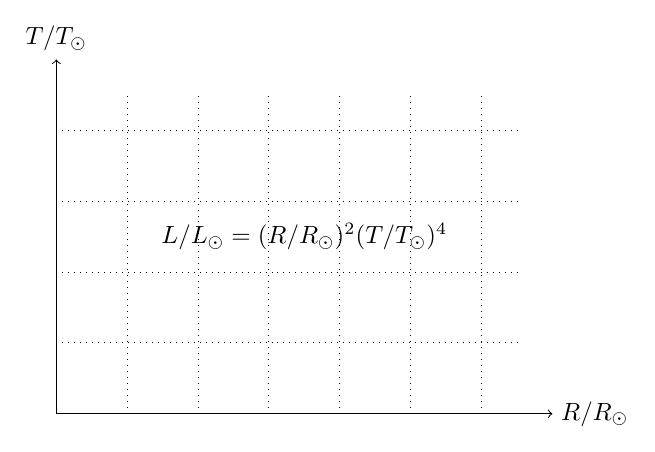
Figure 3. Stellar luminosity grows quadratically with radius and with the fourth power of effective temperature.
Solution 5Start with
Solve for radius:
Substitute the values:
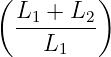
Solution 6Luminosities add:
The magnitude change is
The unresolved pair is 0.753 magnitudes brighter than one component.
Solution 7The total luminosity is
Relative to star 1,
Thus adding the one-solar-luminosity companion makes the unresolved system about 0.24 magnitudes brighter than the primary alone.
Solution 8Use
With
we obtain
Since
the luminosity per nanometer is
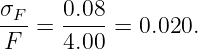
Solution 9The fractional flux uncertainty is
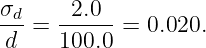
The fractional distance uncertainty is
Therefore
Thus the luminosity uncertainty is approximately
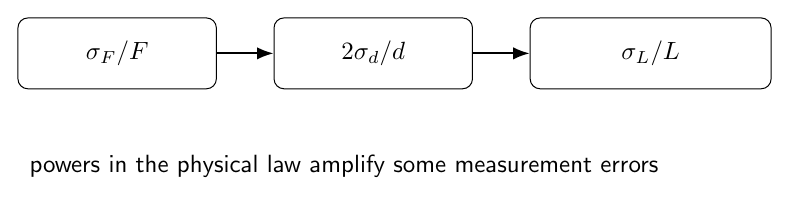
Distance dominates even though the fractional distance and flux errors are equal.
Figure 4. Distance uncertainty enters the luminosity relation with a factor of two, while temperature uncertainty enters stellar luminosity with a factor of four.
Solution 10Use
Thus
So the luminosity uncertainty is again about
The temperature error contributes more strongly because of the fourth power.
Solution 11Use
Therefore
Solution 12For star 1,
For star 2,
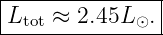
Thus
In SI units,
The distance is
The bolometric flux is
The magnitude brightening relative to star 1 alone is
Even a substantially fainter secondary therefore shifts the unresolved system upward in luminosity.
Part III: Additional conceptual checks
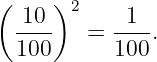
Check 1If two otherwise identical stars are placed at 10 pc and 100 pc, which has the greater luminosity? They have the same luminosity. The more distant star has a flux smaller by
Check 2If stellar radius doubles while effective temperature stays fixed, luminosity changes by
Check 3If effective temperature doubles while radius stays fixed, luminosity changes by
Check 4Can a star have high luminosity but low observed flux? Yes. A sufficiently large distance can make the received flux small. This is precisely why luminosity and flux must be kept conceptually separate.
Summary of useful formulas
References
References
[1] B. W. Carroll and D. A. Ostlie, An Introduction to Modern Astrophysics, 2nd ed., Cambridge University Press, 2017. [2] G. B. Rybicki and A. P. Lightman, Radiative Processes in Astrophysics, Wiley, 1979. [3] International Astronomical Union, Resolution B3 on Recommended Nominal Conversion Constants for Selected Solar and Planetary Properties, 2015. [4] International Astronomical Union, Resolution B2 on Recommended Zero Points for the Absolute and Apparent Bolometric Magnitude Scales, 2015. "Luminosity: Worked Examples and Complete Solutions" is owned by bloftin.
This object's parent. Cross-references: power, temperature, absolute magnitude, spectral luminosity, system, magnitude, parallax, unit, flux, energy, relations, luminosity This is version 1 of Luminosity: Worked Examples and Complete Solutions, born on 2026-10-06. Object id is 1429, canonical name is LuminosityWorkedExamplesAndCompleteSolutions. Accessed 5 times total. Classification:
|
|
|
|
Pending Errata and AddendaNone.
|
DiscussionNo messages.
|
Interact |
![[parent]](https://images.physicslibrary.org/images/uparrow.png)





















 (2
(2