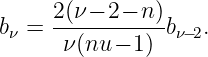
|
|
|
|||||||
This object's parent.
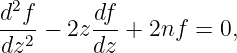
Cross-references: Hermite polynomials, complex plane, power series, functions, differential equation There is 1 reference to this object. This is version 1 of Hermite equation, born on 2009-04-19. Object id is 683, canonical name is HermiteEquation. Accessed 1954 times total. Classification:
|
|
|
|
Pending Errata and AddendaNone.
|
DiscussionNo messages.
|
Interact |
![[parent]](https://images.physicslibrary.org/images/uparrow.png)