1 Towers, Galileo and the Importance of Physics and Mathematics
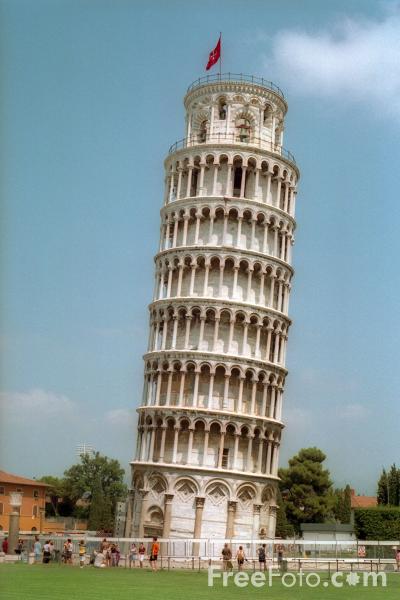
It has been reported that Galileo Galilei took advantage of the architectural error made with the
famous Leaning Tower of Pisa,(Tuscany, Italy) to carry out succesful experiments regarding
gravitational acceleration, g, of falling massive bodies in The Gravitational Field G of the
Earth.
On the other hand, there are of course many other towers that are successful and famous even
though they may have contributed little to the development of theories in physics or
mathematics.
2 Successful, Famous Towers
No.1 Favorite: Empire state building
http : ∕∕i3.photobucket.com∕albums∕y90∕hillaryk∕EmpireStateBuilding.gif
No.2:
Sears Tower:
I admire No.1 , but take your pick!
No.3:
Eiffel Tower
Here is also a green picture of Eiffel Tower that many Parisian artists didn’t seem to like when it
was built.
(See linked picts.)
There are many other towers–such as the ones shown above– that have been major
architectural successes but may not have contributed anywhere near as much to physics as
Galileo’s experiments from the famous Leaning Tower of Pisa ; this may also lead one to
suspect that there is some hidden, negative (inverse) statistical correlation between
successful physics experiments and architectural disasters. The new London bridge, with
its forced oscillation problems– uncovered promptly by the Nobel Laureate, Professor
Brian Josephson (at the Cavendish Laboratory in Cambridge, United Kingdom of Great
Britain and Northern Ireland), and reported by him a few years back in “The Times” in
London– may be one other such improbable indication of the possibility of such an
inverse correlation, but– more importantly– it is a strong reminder to all of us of the
leading role of physics and mathematics in relation to all sorts of human engineering
(including civil engineering, machines, computers, robots, nanotechnologies, biotech, and so
on).
The ‘other side of the coin’ is that, when physics and its –preferrably stated in mathematical
language– universal laws are ignored, the results can be disastrous. Furthermore, when any
mathematical calculations are incorrect or plain wrong in engineering apllications, constructions,
computers, machines of any kind (e.g. Universal Turing Automata (UTA)), etc., one can expect
almost with certainty all kinds of disastrous consequences. Hence all engineers must master both
physics and mathematics to a sufficient degree that such disasters do not recur and, well, most of
the time they do not. But one should not, and cannot, forget either the famous disaster of the
Titanic, or of the rapid burning of the compartmented Hydrogen-filled zeppelin dirigible
“Hindenburg” at Lakehurst, New Jersey, in 1937 –yet another disastrous, but not so
tall tower. Here, there is no need for one to look for possible, or improbable, hidden
statistical correlations as the lack of understanding–or just the misuse–of both physics and
mathematics was clearly the cause of such disasters, along however with the widespread human
greed.
2.1 ‘Accident’– Disaster ‘Towers’
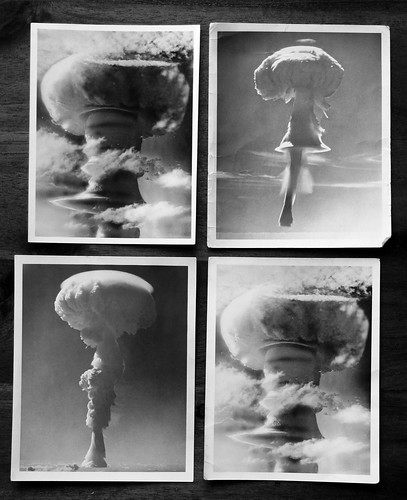
More recently, such misuses of physics and mathematics are also the cause of the A- disaster and
the potential H-uncontrolled nuclear fusion tests or H-fusion weapons, or actual, far
worse catastrophes–as for example the Chernobyl reactor disaster in SU that affected
much of the world, even outside Europe and Asia; in the former two cases, however,
this involved certain famous physicists’ dismal failure to fully understand the social,
political and human consequences of the newly acquired high power of physics in the new
atomic and quantum world that physicists created, somewhat like making ‘a car without
brakes’. Is it, then, at all surprising that one the most famous mathematicians (with
interests in both physics and biology), Alexander Grothendieck –repeatedly and quite
strongly– objected publicly to the use of theoretical work for covert goals that could lead to
the doom of the entire human race ? What is much more surprising is that most of
his close associates did not agree with his most reasonable stand against destructive
uses of powerful theoretical tools that they developed or helped develop; their negative
reaction to his protests was thus a great surprise and source of severe disillusion to
Alexander Grothendieck about some of his closest coworkers; he must have felt the same
as Caesar uttering “Atque Brutae!”, or as Galileo might have said again: “Et pur si
muove!”.
2.2 Potential, global disasters stemming from ignoring physics and mathematics
Global warming and the ozone layer depletion are in the same category of potential disasters on an
unprecedented scale for the human race. Beware that forgetting about physics and mathematics,
and only playing ‘politics’ with ‘green’ words, has no chance at all of either solving these problems
or averting such impending disasters.