In astronomy, stars have a variety of different stellar designations and names, including
catalogue designations, current and historical proper names, and foreign language names.
Only a tiny minority of known stars have proper names; all others have only designations from
various catalogues or lists, or no identifier at all. Hipparchus in the 2nd century BC enumerated
about 850 naked-eye stars. Johann Bayer in 1603 listed about twice this number and now we refer
often to a Bayer designation. Only in the 19th century did star catalogues list the naked-eye
stars exhaustively. The Bright Star Catalogue, which is a star catalogue listing all stars
of apparent magnitude 6.5 or brighter, or roughly every star visible to the naked eye
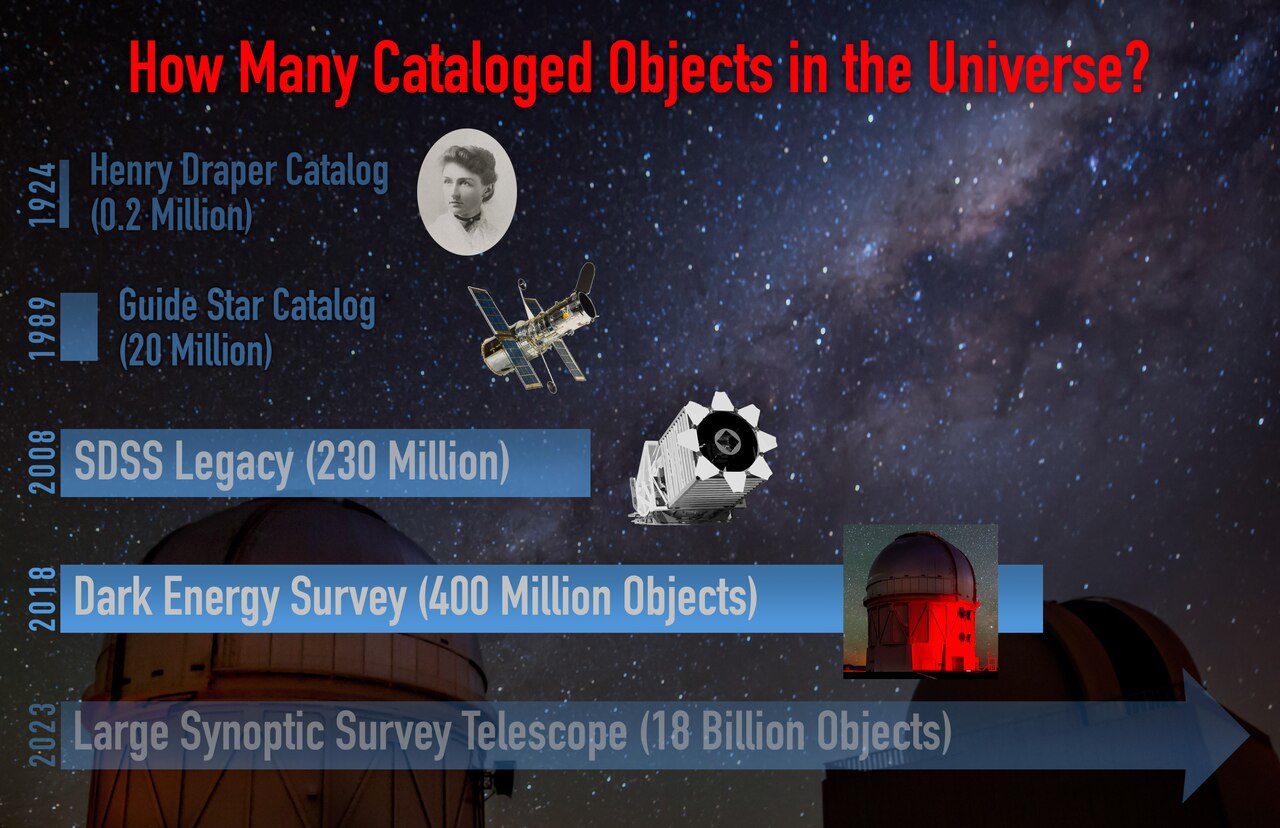
from Earth, contains 9,096 stars.[1] The most voluminous modern catalogues list on the
order of a billion stars, out of an estimated total of 200 to 400 billion in the Milky Way.
Proper names may be historical, often transliterated from Arabic or Chinese names. Such
transliterations can vary so there may be multiple spellings. A smaller number of names have
been introduced since the Middle Ages, and a few in modern times as nicknames have
come into popular use, for example Sualocin for α Delphini and Navi for γ Cassiopeiae.
The International Astronomical Union (IAU) has begun a process to select and formalise
unique proper names for the brighter naked-eye stars and for other stars of popular
interest. To the IAU, name refers to the (usually colloquial) term used for a star in
everyday speech, while “designation is solely alphanumerical” and used almost exclusively
in official catalogues and for professional astronomy. Many of the names and some of
the designations in use today were inherited from the time before the IAU existed.
Other designations are being added all the time. As of the start of 2019, the IAU had
decided on a little over 300 proper names, mostly for the brighter naked-eye stars.[2]
Figure 1:The trend toward ever more catalogued objects in the Universe
References
This article is a derivative work of the creative commons share alike with attribution in
[8]. [1] The Bright Star Catalogue, 5th Revised Ed. [2] “Naming Stars”. IAU.org. Retrieved 2019-01-17 [8] Wikipedia contributors, “Stellar designations and names,” Wikipedia, The Free
Encyclopedia.
"Stellar Designations and Names" is owned by bloftin.
This is version 3 of Stellar Designations and Names, born on 2025-04-15, modified 2025-04-15.
Object id is 1001, canonical name is StellarDesignationsAndNames.
Accessed 4603 times total.