|
|
|
|||||||
For intrinsic i-j-k,
For proper Euler angles,
so
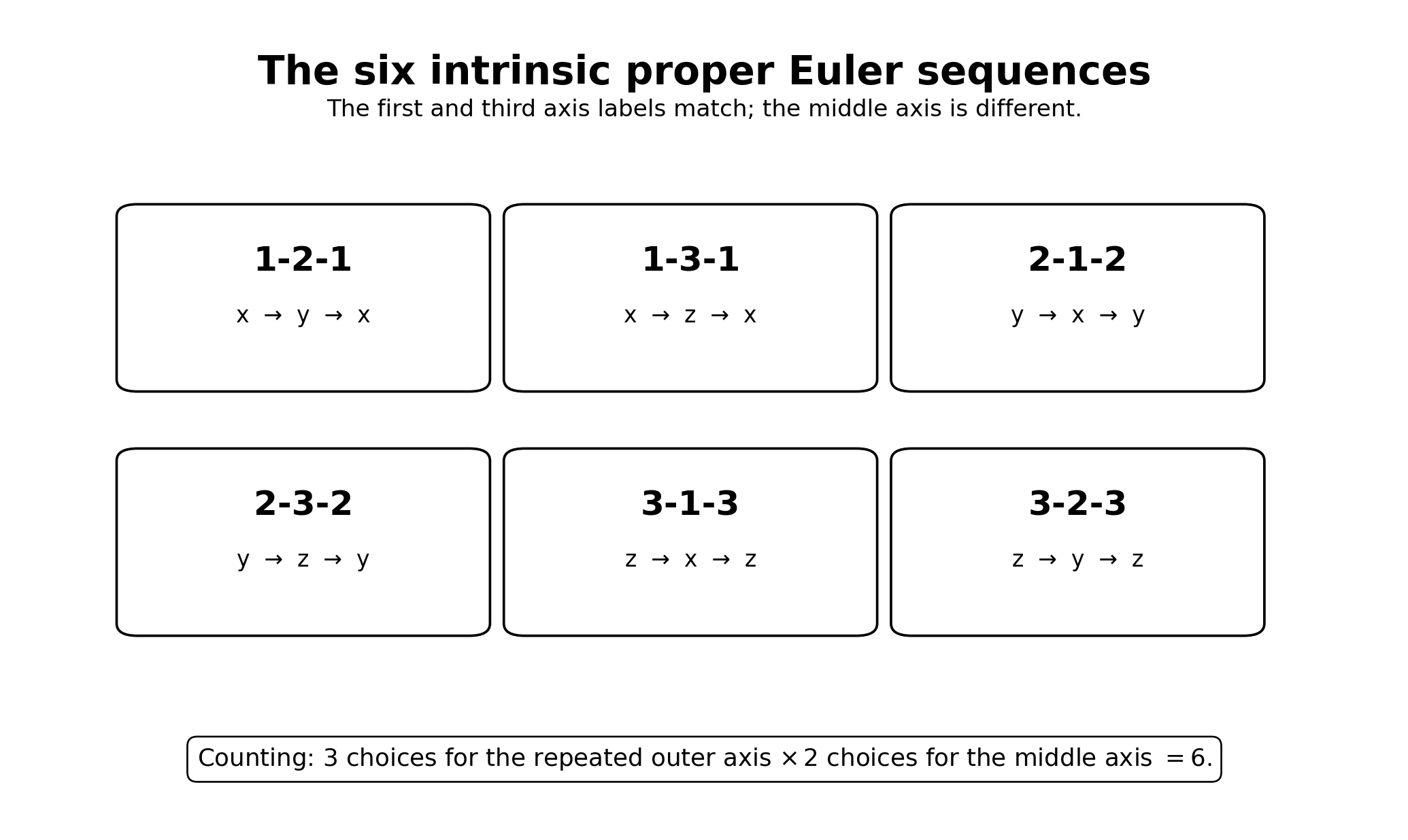
The six proper Euler sequences are
Their generic singularity is
2 Visual reference
Figure. The six intrinsic proper Euler sequences.
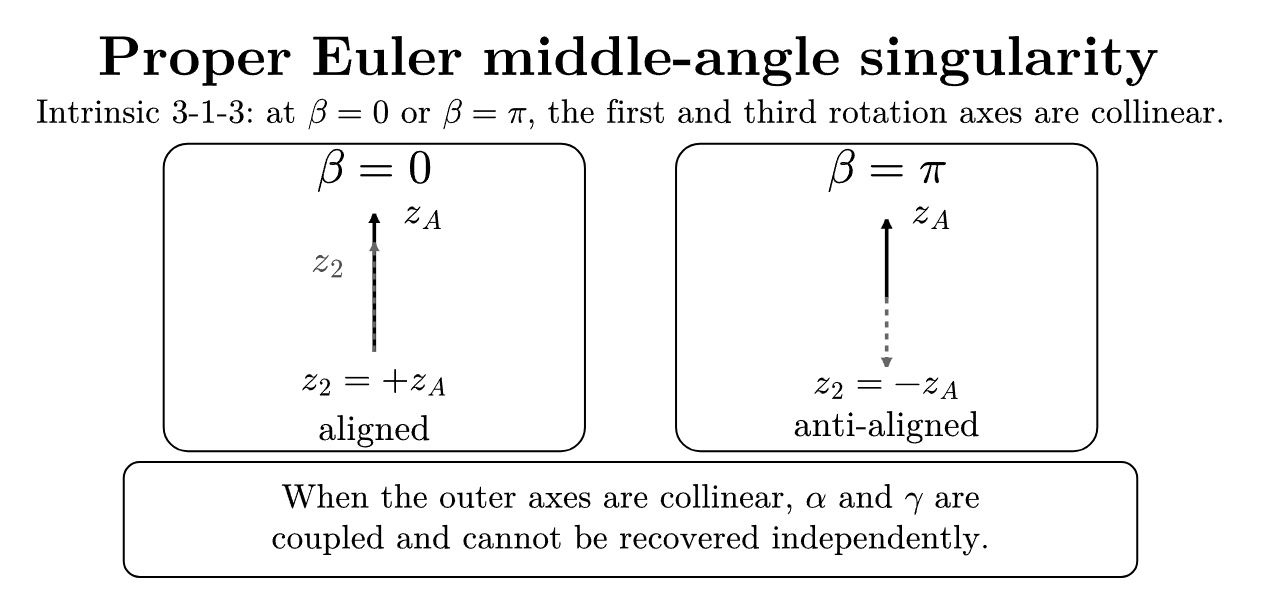
Figure. The proper Euler singularity illustrated with intrinsic 3-1-3.
3 Exercises
4 Solutions
Solution 1: recognize proper Euler sequencesProper Euler sequences have equal first and third labels. Thus
 are proper Euler. The others shown are Tait Bryan.
Solution 2: generate all six sequencesChoose the repeated outer axis in three ways. For each choice, select either of the other two axes as the middle axis. Hence
 The sequences are
Solution 3: write all six passive productsUsing
 we obtain
and
Solution 4: recover a sequence from a productThe rightmost factor contains the first angle and identifies the first axis. Thus
 is intrinsic
Solution 5: recover another sequenceLikewise,
 is intrinsic
Solution 6: repeated label versus physical axisThe first axis 3 belongs to the initial frame. After the first rotation, the middle rotation about the new axis 1 changes the current frame orientation. The final axis 3 belongs to that second intermediate frame. Therefore the first and third axis-3 directions are generally not parallel. The repeated digit means the same coordinate-axis label in different intermediate frames, not necessarily the same physical line.
Solution 7: single-angle reductions for 3-1-3From
 we obtain
and
Solution 8: universal singularityEvery proper Euler sequence is singular when
On
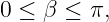 the singular values are
Solution 9: outer-angle coupling at beta equals zeroAt
 the middle rotation becomes the identity:
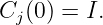 Thus
Same-axis rotations add, so
Only
can therefore be determined from the final orientation.
Solution 10: outer-angle coupling at beta equals piAt
 the middle rotation reverses the repeated outer axis. The first and third physical axes therefore lie on the same line but point in opposite directions. Two rotations about that same physical line cannot be recovered independently. Only one signed difference combination of the outer angles remains observable.
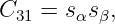
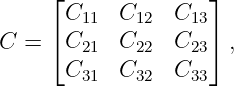
Solution 11: derive the third row of the 3-1-3 DCMMultiplication gives the third row
Hence
and
These entries directly motivate the inverse formulas.
Solution 12: extract 3-1-3 anglesOn the nonsingular principal branch,
and
These formulas require
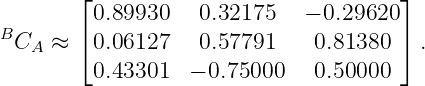
Solution 13: numerical 3-1-3 DCMFor

gives
Solution 14: numerical round tripThe middle angle is
 The first angle is
 The third angle is
 Thus
Solution 15: equivalent extrinsic 3-1-3Reverse the axis order and reverse the angle association. Because 3-1-3 is a palindrome, the digit string remains unchanged:
The unchanged digits can hide the fact that the axis construction and chronological angle assignment have changed.
Solution 16: another proper Euler conversionSimilarly,
Solution 17: alternate branchAway from singularity, an equivalent proper Euler triple is
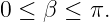
with the outer angles wrapped by multiples of 2π if needed. Therefore Euler coordinates are not globally unique. The principal choice
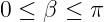 selects a standard representative.
Solution 18: passive quaternion counterpartFor intrinsic 3-1-3,
The quaternion and DCM describe the same passive map:
Solution 19: distinguish Euler families from singularityThe condition
 belongs to the Tait Bryan family. The condition
 belongs to the proper Euler family.
Solution 20: convention auditThe sequence label alone is incomplete. At minimum, determine:
Only after those conventions agree should formulas be copied directly.
5 Compact reviewThe six proper Euler sequences are
For intrinsic i-j-i,
Their generic singularity is
For intrinsic 3-1-3,
Away from singularity,
and
6 Sources and exercise provenanceThe exercises and solutions in this companion are newly written for PhysicsLibrary to reinforce the framework developed in Euler angles: proper Euler angles.
References
[1] H. Goldstein, C. Poole, and J. Safko, Classical Mechanics, 3rd ed., Addison Wesley, 2002. Publisher search [2] D. M. Henderson, Euler Angles, Quaternions, and Transformation Matrices: Working Relationships, JSC-12960, NASA Johnson Space Center, 1977. NASA Technical Reports Server [3] J. Diebel, “Representing Attitude: Euler Angles, Unit Quaternions, and Rotation Vectors,” Stanford University, 2006. Online PDF
LicenseUnless otherwise noted, this PhysicsLibrary entry is intended for release under the Creative Commons Attribution ShareAlike 4.0 International license. "example of Euler angles: proper Euler angles" is owned by bloftin.
This object's parent. Cross-references: operator, vectors, identity, mechanics, relation, quaternion product, quaternion, matrix, formulas, observable, Euler Angles This is version 1 of example of Euler angles: proper Euler angles, born on 2026-08-30. Object id is 1130, canonical name is ExampleOfEulerAnglesProperEulerAngles. Accessed 332 times total. Classification:
|
|
|
|
Pending Errata and AddendaNone.
|
DiscussionNo messages.
|
Interact |
![[parent]](https://images.physicslibrary.org/images/uparrow.png)

































![[ ]
sαsβ − cαsβ cβ .](https://images.physicslibrary.org/cache/objects/1130/make4ht/ExampleOfEulerAnglesProperEulerAngles45x.png)