|
|
|
|||||||
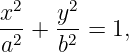
3.2 Ellipse EquationPlace the Sun at one focus, say at (c, 0, 0) in Cartesian coordinates with the center at the origin (0, 0, 0):
where a = 149.598 million km, b = 149.577 million km. Adjust coordinates so the Sun is at (2.497, 0, 0):
3.3 Visualizing the OrbitImagine Earth tracing this ellipse:
Earth completes one full elliptical loop every 365.256 days (a sidereal year), with the Sun fixed at one focus.
4 Real-World Context
5 Why It’s Kepler’s First LawThis example embodies the law:
6 Fun CheckKepler derived this from Tycho Brahe’s data, noticing Mars’ orbit (e = 0.093) was more obviously elliptical. Earth’s subtler ellipse still fits perfectly, validated by modern measurements (e.g., NASA’s orbital elements).
7 ConclusionEarth’s orbit is a living example of Kepler’s First Law-an ellipse with the Sun at one
focus, gracefully traced year after year. It’s a cosmic dance where geometry meets motion,
showing how even our familiar planet follows the elegant rules of the universe!
This example was generated by Grok, an AI developed by xAI, on February 24, 2025.
References
[1] Murray, C. D., & Dermott, S. F. (1999). Solar System Dynamics. Cambridge University Press. [2] Seidelmann, P. K. (Ed.). (1992). Explanatory Supplement to the Astronomical Almanac. University Science Books. [3] Lang, K. R. (2011). The Cambridge Guide to the Solar System (2nd ed.). Cambridge University Press. [4] NASA JPL. (2025). ”Planetary Fact Sheet.” Solar System Dynamics. [5] Kepler, J. (1609). Astronomia Nova. (Trans. Donahue, W. H., 1992). Green Lion Press. "example of Kepler's first law with Earth's orbit" is owned by bloftin. This object's parent. Cross-references: universe, heat, Cartesian coordinates, unit, traces, mechanics, Kepler's first law This is version 17 of example of Kepler's first law with Earth's orbit, born on 2025-03-01, modified 2025-03-01. Object id is 964, canonical name is ExampleOfKeplersFirstLawWithEarthsOrbit. Accessed 1689 times total. Classification:
|
|
|
|
Pending Errata and AddendaNone.
|
DiscussionNo messages.
|
Interact |
![[parent]](https://images.physicslibrary.org/images/uparrow.png)
 .
.