Electromagnetic Waves, Antennas, and RF: Electric Flux - Exercises and Complete Worked
Solutions
This companion article provides self-study exercises for EM06, Electric flux. All exercises are stated
first. Complete worked solutions follow in Part II.
The problems reinforce four ideas developed in EM06:
- a surface must be given an orientation through its normal vector;
- only the component of E normal to the surface contributes to flux;
- a general surface requires a surface integral; and
- a closed surface uses outward-pointing area vectors.
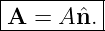
For a flat surface of area A with unit normal n,
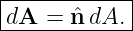
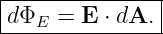
For a small surface patch,
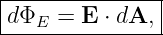
The differential flux is
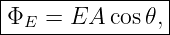
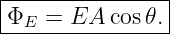
and for a uniform field over a flat surface,
where 𝜃 is measured between the Electric Field and the chosen surface normal.
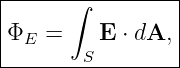
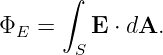
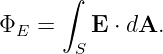
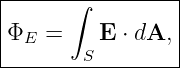
For a general open surface,
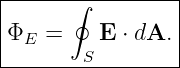
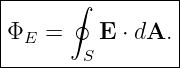
while for a closed surface the outward-normal convention gives
These are the same definitions and conventions used in EM06 [1, 2, 3, 4].
How to use this problem set
Attempt all exercises in Part I before reading Part II. For every flux problem, explicitly
identify
- the field vector E;
- the surface normal n;
- whether the surface is open or closed;
- the angle between the field and the normal, not the field and the surface; and
- the sign of E ⋅ dA.
In Exercises 12 and 13, use the centered point-charge spherical result derived directly from
Coulomb’s field in EM06. Do not invoke the general form of Gauss’s Law; that theorem is reserved
for EM07.
Part I: Exercises
Exercise 1: area vector and orientation
A flat surface has area
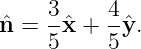
and chosen unit normal
Find the area vector A. Then write the area vector if the orientation is reversed.
Exercise 2: field normal to a surface
A uniform electric field has magnitude
It passes through a flat surface of area
in the same direction as the chosen surface normal. Find the electric flux.
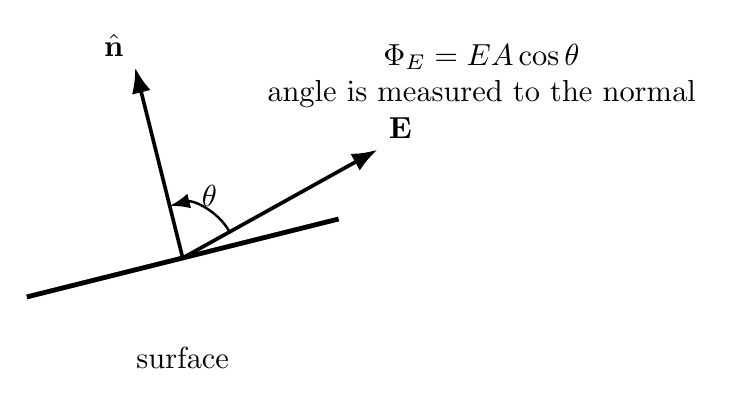
Figure. The flux angle is measured between the electric field and the surface normal.
Tilting the surface changes the normal and therefore changes the projected area seen by
the field.
Exercise 3: tilted flat surface
A uniform field of magnitude
crosses a flat surface of area
The angle between E and the chosen surface normal is
Find the flux.
Exercise 4: angle given relative to the surface
A field of magnitude
crosses a flat surface of area
The field makes an angle of 30∘ with the surface itself. Find the electric flux for the normal that
makes an acute angle with the field.
Exercise 5: reversing orientation
For one chosen normal, the electric flux through an open surface is
What is the flux if the surface orientation is reversed? Has the electric field changed?
Exercise 6: compute flux with a vector dot product
A uniform electric field is
A flat surface has area
and unit normal
Compute the electric flux using ΦE = E ⋅ A.
Exercise 7: zero flux with a nonzero field
A uniform field is
A rectangular surface lies in the xy plane and has chosen normal +z.
- Find the flux through the rectangle.
- Explain why the result does not imply that the electric field is zero.
Exercise 8: a nonuniform field over a plane
The electric field is
A rectangular surface lies in the plane x = 2 m, with chosen normal +x. Its coordinate limits
are
Evaluate
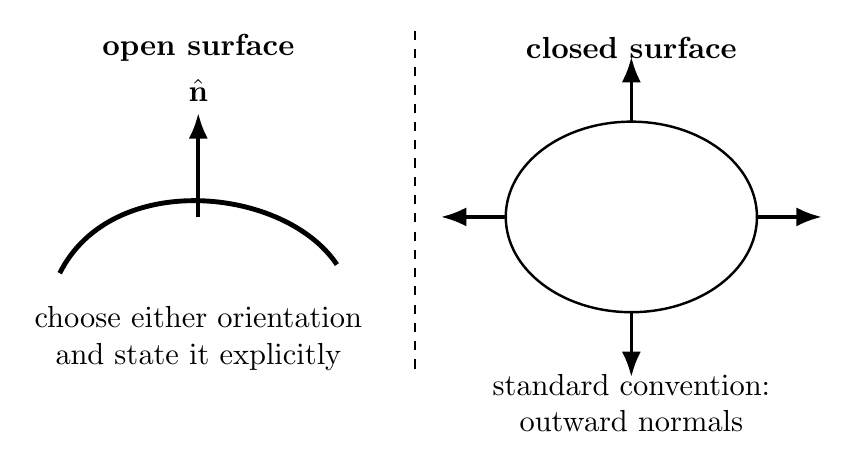
Figure. An open surface requires a chosen normal. A closed surface instead uses the
outward normal everywhere.
Exercise 9: uniform field through a closed box
A rectangular box is placed in a uniform field
The two faces perpendicular to the x axis each have area A. Determine the flux through each of
those two faces, the flux through the other four faces, and the total flux through the closed
box.
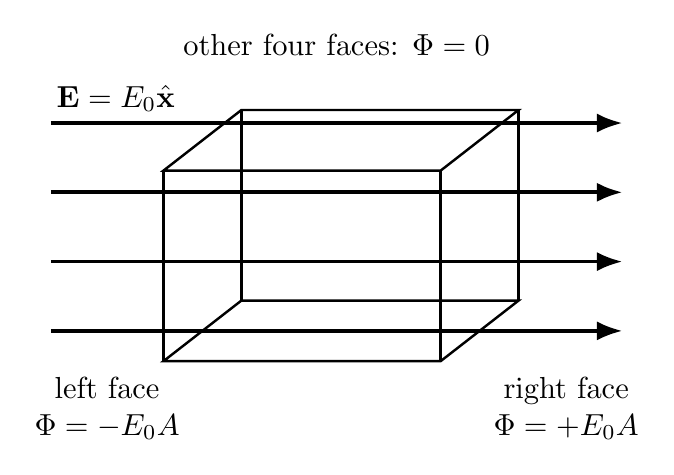
Figure. For a uniform field, the positive outward flux through one face is canceled by
equal negative flux through the opposite face.
Exercise 10: a nonuniform field through a rectangular box
Let
with
A rectangular box spans
Compute the flux through all six faces directly and find the net closed-surface flux.
Exercise 11: flux through a hemisphere in a uniform field
A hemisphere of radius
occupies the +x side of a sphere. Its curved surface uses the outward normal. A uniform
field
passes through it.
Using the projected-area interpretation, find the flux through the curved hemispherical
surface.
Exercise 12: centered point charge and spherical flux
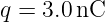
A point charge
is at the center of a spherical surface. Using the Coulomb-field derivation from EM06,
find the electric flux through the sphere.
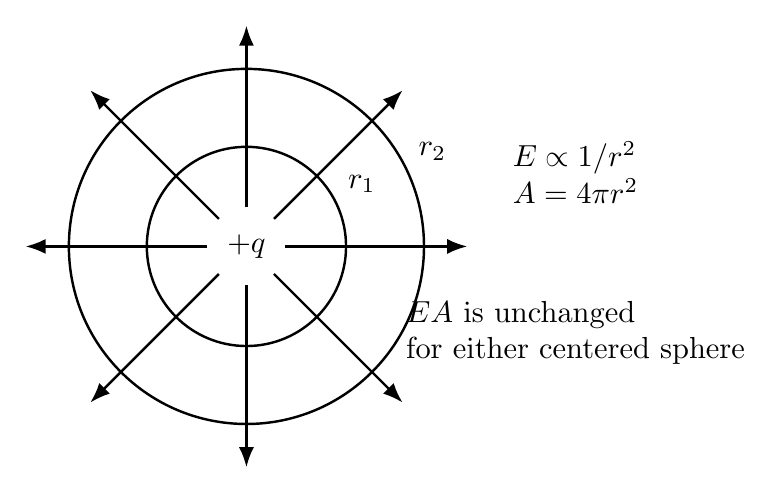
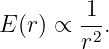
Figure. For centered spherical surfaces, the point-charge field weakens as 1∕r2 while the
spherical area grows as r2. Their product is independent of radius.
Exercise 13: compare two spherical radii
The same positive point charge is surrounded by two centered spherical surfaces of
radii
Find:
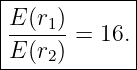
- the ratio E(r1)∕E(r2);
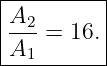
- the ratio A2∕A1 of spherical areas;
- the ratio Φ1∕Φ2 of total fluxes.
Explain why the result is consistent with the inverse-square field.
Exercise 14: diagnose conceptual statements
For each statement, decide whether it is correct. If it is incorrect, rewrite it accurately.
- “Electric flux is the number of physical electric-field lines crossing a surface.”
- “A nonzero electric field always produces nonzero flux through every surface.”
- “The angle in EA cos 𝜃 is measured from the field to the surface normal.”
- “Reversing the normal of an open surface reverses the sign of its flux.”
- “For a closed surface, outward normals are the standard orientation.”
- “The result q∕𝜖0 derived in EM06 for a centered point charge and sphere is already the
full general statement of Gauss’s law.”
Part II: Complete Worked Solutions
Solution 1: area vector and orientation
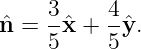
The area vector is
Therefore,
| A | = (0.40)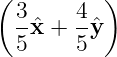 m2 m2 | (34)
|
| =  m2. m2. | (35) |
Thus
Reversing the orientation changes n to −n, so
The scalar area has not changed. Only the chosen orientation has changed.
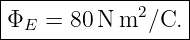
Solution 2: field normal to a surface
Because the field points in the same direction as the chosen normal,
Therefore,
| ΦE | = EA cos 0 | (39)
|
| = (250)(0.32) | (40)
|
| = 80 N m2∕C. | (41) |
Hence
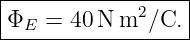
Solution 3: tilted flat surface
Use
Then
| ΦE | = (250)(0.32) cos 60∘ | (44)
|
| = 80 | (45)
|
| = 40 N m2∕C. | (46) |
Thus
The tilt reduces the effective projected area by the factor cos 60∘ = 1∕2.
Solution 4: angle given relative to the surface
The given 30∘ is measured from the field to the surface, not to the normal. The normal is
perpendicular to the surface, so the angle to the normal is
Hence
| ΦE | = EA cos 60∘ | (49)
|
| = (180)(0.50) | (50)
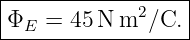
|
| = 45 N m2∕C. | (51) |
Therefore,
This exercise illustrates why the angle convention must be checked before applying the cosine
formula.
Solution 5: reversing orientation
Reversing the normal sends
Therefore,
Thus
The electric field has not changed. Only the bookkeeping orientation of the open surface
changed.
Solution 6: compute flux with a vector dot product
First construct the area vector:
| A | = An | (56)
|
| = 0.40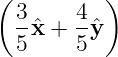 m2 m2 | (57)
|
| =  m2. m2. | (58) |
Now take the dot product:
| ΦE | = E ⋅ A | (59)
|
| = (120)(0.24) + (−50)(0.32) + (30)(0) | (60)
|
| = 28.8 − 16.0 | (61)
|
| = 12.8 N m2∕C. | (62) |
Therefore,
The z component of the field contributes nothing because the chosen surface normal has no z
component.
Solution 7: zero flux with a nonzero field
The field points along +x while the surface normal points along +z. These directions are
perpendicular, so
Thus
The field is still
which is nonzero. The flux vanishes because the field runs parallel to the surface instead of through
it.
Solution 8: a nonuniform field over a plane
The rectangle lies in the plane x = 2 m and has normal +x, so
Therefore,
The total flux is
| ΦE | = ∫
00.50 ∫
01(10 + 4y) dy dz | (69)
|
| = ∫
00.50![[ 2]
10y + 2y](https://images.physicslibrary.org/cache/objects/1220/make4ht/LectromagneticWavesElectricFluxExercisesAndCompleteWorkedSolutions56x.png) 01dz
01dz | (70)
|
| = ∫
00.5012 dz | (71)
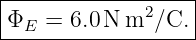
|
| = 6.0 N m2∕C. | (72) |
Hence
The simple product EA is not sufficient here because the field magnitude changes with y across the
surface.
Solution 9: uniform field through a closed box
For the face whose outward normal is +x,
For the opposite face, the outward normal is −x, so
On the remaining four faces, the normals are perpendicular to E, so
for each of those faces.
Adding all six contributions,
Therefore,
The field is nonzero, but equal flux enters and leaves the box.
Solution 10: a nonuniform field through a rectangular box
The field is
Only the two faces perpendicular to the x axis contribute. Their area is
At the right face, x = 3 m and the outward normal is +x. The field magnitude there
is
Therefore,
At the left face, x = 1 m and the outward normal is −x. The field magnitude there
is
Thus,
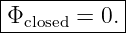
The other four faces have normals perpendicular to the field, so their flux is zero. Hence
| Φclosed | = 30 − 10 | (85)
|
| = 20 N m2∕C. | (86) |
Therefore,
Unlike the uniform-field case, the field is stronger on the right side than on the left, so the outward
and inward contributions do not cancel.
Solution 11: flux through a hemisphere in a uniform field
For a uniform field, the flux through the curved hemisphere equals the field magnitude times the
area projected onto a plane perpendicular to the field.
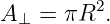
The projection of the hemisphere onto the yz plane is a disk of area
Therefore,
| ΦE | = EπR2 | (89)
|
| = (300)π(0.20)2 | (90)
|
| = 12π N m2∕C | (91)
|
| ≈ 37.7 N m2∕C. | (92) |
Hence
The flux is positive because the outward normals on the +x hemisphere have positive x
components.
Solution 12: centered point charge and spherical flux
EM06 derived, directly from Coulomb’s field for a centered point charge,
Using
and
we obtain
| ΦE | = 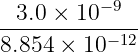 | (97)
|
| ≈ 3.39 × 10² N m2∕C. | (98) |
Thus
This result is independent of the sphere radius for the centered point-charge geometry.
Solution 13: compare two spherical radii
For a point charge,
Therefore,
 | =  2 2 | (101)
|
| =  2 2 | (102)
|
| = 16. | (103) |
Hence
Spherical area scales as r2, so
 | =  2 2 | (105)
|
| = 16. | (106) |
Thus
Flux is the product of field magnitude and spherical area in this centered geometry. The factor of
16 decrease in field magnitude from r1 to r2 is exactly canceled by the factor of 16 increase in area.
Therefore,
Solution 14: diagnose conceptual statements
- Incorrect. Electric-field lines are a visualization convention. Electric flux is defined
mathematically by
- Incorrect. A nonzero field can give zero flux through a surface if the field is tangent to the
surface everywhere, so that E ⋅ dA = 0.
- Correct. The angle in
is measured between E and the chosen surface normal.
- Correct. Reversing the normal changes dA to −dA, so the flux changes sign.
- Correct. Closed surfaces conventionally use outward-pointing area vectors.
- Incorrect. EM06 derived q∕𝜖0 only for a sphere centered on a point charge, using Coulomb’s
field. EM07 will state and analyze the general law for arbitrary closed surfaces and enclosed
charge distributions.
Common mistakes
- Using the angle to the surface rather than the normal. Convert to the
complementary angle before using EA cos 𝜃.
- Treating area as a scalar when orientation matters. Flux uses dA = ndA.
- Assuming a strong field guarantees large flux. Tangential field contributes zero
normal flux.
- Forgetting the outward-normal convention on a closed surface.
- Using EA for a field that varies over the surface. In that case, evaluate the
surface integral.
- Calling field lines physical objects. They are only a visualization of the continuous
vector field.
- Invoking general Gauss’s law too early. EM06 and EM06E use only flux definitions
plus the special centered-sphere result derived from Coulomb’s field.
What EM06E reinforces
The fundamental local statement is
For a uniform field over a flat surface,
For a general surface,
and for a closed surface,
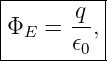
The centered point-charge sphere provides the important preview
but the general relationship between closed-surface flux and enclosed charge belongs to EM07,
Gauss’s Law.
References
[1] David J. Griffiths, Introduction to Electrodynamics, 4th ed., Cambridge University
Press, 2017.
[2] Samuel J. Ling, Jeff Sanny, and William Moebs, University Physics, Volume 2,
OpenStax, 2016, sections on electric flux and Gauss’s law.
[3] Edward M. Purcell and David J. Morin, Electricity and Magnetism, 3rd ed.,
Cambridge University Press, 2013.
[4] Massachusetts Institute of Technology, 8.02 Physics II: Electricity and Magnetism,
MIT OpenCourseWare, materials on electric fields, flux, and Gauss’s law.
[5] Richard P. Feynman, Robert B. Leighton, and Matthew Sands, The Feynman Lectures
on Physics, Volume II, Addison-Wesley, 1964, chapters on electrostatics and electric
fields.

![[parent]](https://images.physicslibrary.org/images/uparrow.png)